
IPTV subscriptions deliver television content through internet connections rather than traditional cable or satellite systems, offering viewers access to thousands of live channels, on-demand movies, and TV shows across multiple devices. This technology has transformed how people consume entertainment, providing flexibility and variety that conventional broadcasting cannot match. An IPTV subscriptions typically includes live TV channels, video-on-demand libraries, and streaming capabilities across smartphones, smart TVs, tablets, and computers for a monthly or annual fee.
Selecting the right service requires careful evaluation of several factors. You need to consider channel availability, streaming quality, device compatibility, customer support, and pricing structures. The market includes both legitimate services with proper licensing and unverified providers that carry legal and security risks.
Understanding what separates reliable IPTV subscriptions from problematic ones protects you from buffering issues, service interruptions, and potential legal complications. The best providers offer stable streaming technology, regular content updates, responsive support teams, and transparent pricing without hidden fees. Your choice should align with your viewing preferences, budget, and technical requirements.
Key Takeaways
- IPTV subscriptions stream television content over the internet with access to live channels and on-demand libraries across multiple devices
- Quality providers offer anti-freeze technology, extensive channel lineups, and reliable customer support with transparent pricing structures
- Verify the legitimacy of IPTV services before subscribing to avoid legal issues, security risks, and unstable streaming performance
What Is an IPTV Subscriptions?
An IPTV subscriptions provides access to television content delivered through internet protocol rather than traditional broadcast methods. These subscriptions typically include live TV channels, on-demand movies, and series that stream directly to your devices over an internet connection.
How IPTV Works
IPTV stands for Internet Protocol Television. Instead of receiving TV signals through satellite dishes or cable infrastructure, IPTV delivers content using the same protocols that power your internet connection.
When you subscribe to an IPTV service, you receive login credentials—either an M3U playlist link or Xtream Codes information. You enter these details into an IPTV player application like Tivimate or IPTV Smarters. The app connects to the provider’s servers and retrieves your content.
The technology uses protocols like IGMP (Internet Group Management Protocol) to manage streams efficiently. This allows providers to deliver 100+ channels simultaneously without overwhelming bandwidth. Your internet speed directly affects performance—you need at least 10-15 Mbps for HD content and 25 Mbps or higher for 4K streaming.
IPTV works on multiple devices including Smart TVs, Amazon Firestick, Android boxes, computers, tablets, and smartphones. You can watch content at home or remotely as long as you have a stable internet connection.
Types of IPTV Services
IPTV services fall into three main categories. Licensed IPTV providers like YouTube TV, Hulu Live TV, and Sling TV operate legally with proper distribution rights. These services cost $40-80 monthly but guarantee stability and security.
Unverified IPTV services offer thousands of channels for $5-20 monthly. Many stream copyrighted content without authorization, which creates legal and security risks. These providers may shut down unexpectedly, leaving subscribers without access.
Free IPTV services rely on public streams that frequently go offline. They include pop-up ads, malware risks, and limited content. While suitable for occasional testing, they cannot serve as reliable primary entertainment sources.
The choice between these types depends on your budget and risk tolerance. Legal IPTV subscriptions cost more but provide peace of mind, while unverified options are cheaper but carry potential consequences.
IPTV vs Cable and Satellite TV
Traditional cable and satellite TV require physical infrastructure like cables or dishes installed at your property. IPTV only needs an internet connection, making installation simpler and faster.
Cable and satellite providers typically charge $70-120 monthly for limited channel packages. IPTV subscriptions range from $5-20 monthly for thousands of channels. This price difference makes IPTV significantly more affordable for most households.
You can watch IPTV on multiple devices simultaneously, while cable and satellite often restrict viewing to specific rooms or charge extra for additional boxes. IPTV provides flexibility to watch content anywhere with internet access.
Content delivery differs fundamentally—cable and satellite use broadcast signals that reach all subscribers simultaneously. IPTV streams content on-demand from servers, allowing features like pause, rewind, and catch-up TV that traditional services cannot easily provide.
However, IPTV performance depends entirely on your internet speed and stability. Cable and satellite work independently of your internet connection, making them more reliable in areas with poor broadband infrastructure.
Key Features of IPTV Subscriptions
IPTV subscriptions come with several essential features that distinguish them from traditional cable and satellite services. Understanding these core capabilities helps you evaluate which service best matches your viewing preferences and household requirements.
Live TV Channels and Channel Lineup
Live TV forms the backbone of most IPTV subscriptions. You get access to real-time broadcasts from networks around the world, just like traditional television but delivered through your internet connection.
The channel lineup varies significantly between providers. Basic subscriptions typically include a few hundred channels covering major categories like news, entertainment, and sports. Premium services often provide thousands of live channels spanning over 80 countries.
Your channel selection determines what content you can watch. Most providers organize their offerings into categories such as:
- Sports (football, basketball, cricket, UFC)
- Entertainment (drama, comedy, reality TV)
- News (local, national, international)
- Movies and cinema channels
- Kids programming
- Documentary channels
- Music and lifestyle content
International viewers particularly benefit from IPTV’s global reach. You can access channels from your home country that traditional providers don’t carry, including regional and local stations.
Video On Demand and On-Demand Movies
Video on demand (VOD) libraries complement live TV by giving you control over what to watch and when. This on-demand content includes movies, TV series, documentaries, and special programming that you can stream anytime.
The VOD catalog size varies between providers. Some offer thousands of on-demand movies, including recent releases and classic films. TV series libraries often include multiple seasons of popular shows, allowing you to binge-watch complete series.
On-demand content eliminates scheduling conflicts. You don’t need to wait for a specific broadcast time or record programs for later viewing. The content stays available in the library until the provider removes it.
Many services update their VOD libraries regularly with new releases. This keeps the content fresh and gives you access to recent films and completed TV seasons shortly after they finish airing.
Electronic Program Guide (EPG) and Program Guide
The electronic program guide displays what’s currently playing and upcoming schedules for your live channels. A quality EPG shows program information for several days ahead, typically 7-14 days depending on the service.
Your EPG includes program titles, descriptions, start times, and duration. This lets you browse upcoming content and plan your viewing. Some advanced guides also display episode information, cast details, and genre categories.
EPG accuracy matters significantly. Reliable providers maintain updated program guides that match actual broadcasts. Poor EPG coverage means you’ll struggle to find content or see incorrect information about what’s airing.
The guide interface varies between IPTV players. Some display grid-style layouts similar to cable boxes, while others use list views or category-based navigation. You can usually filter channels by category and create favorites lists for quick access.
Simultaneous Streams and Multi-Device Support
Multi-device support lets you use your IPTV subscriptions across different screens. Most services work on smart TVs, streaming devices, smartphones, tablets, and computers without requiring separate subscriptions for each device.
Simultaneous streams determine how many devices can watch different content at the same time. Single-stream subscriptions only allow one active connection, while premium plans may permit 2-5 concurrent streams.
| Connection Type | Typical Usage |
|---|---|
| 1 stream | Individual viewers or small households |
| 2 streams | Couples or small families |
| 3-5 streams | Larger families or shared accounts |
Device compatibility includes popular platforms like Android, iOS, Amazon Firestick, Roku, Apple TV, and smart TV operating systems. You can start watching on one device and switch to another, though you’ll need to stop playback on the first device if you don’t have multiple simultaneous streams.
Choosing the Best IPTV Subscriptions
Selecting an IPTV service requires evaluating multiple technical and practical factors. The most critical considerations include provider reliability, compatibility with your streaming devices, actual streaming quality across different resolutions, and the level of customer support available when issues arise.
IPTV Providers and Service Reliability
IPTV providers vary significantly in their infrastructure quality and server stability. When evaluating IPTV services, you should prioritize those with documented 99.9% uptime records, as this indicates consistent server performance and minimal service interruptions.
Reliability extends beyond simple uptime metrics. The best IPTV service options maintain anti-freeze technology that prevents stream degradation during high-traffic periods. This becomes particularly important during live sports events or premium broadcasts when server loads increase substantially.
You should verify whether providers offer trial periods before committing to long-term subscriptions. A 24-hour trial allows you to test stream stability during your typical viewing hours. Additionally, examine whether the service maintains dedicated servers for different regions, as this directly impacts connection speed and reliability for your geographic location.
Research the provider’s content update frequency for live TV channels and on-demand libraries. Services that refresh their channel lineups daily demonstrate active infrastructure management and commitment to service quality.
Device Compatibility and IPTV Players
Your IPTV subscriptions must function seamlessly across all your streaming devices. Most reputable IPTV services support Android TV, Firestick, Android TV Box, Smart TVs, Windows PC, Roku, and NVIDIA Shield. Verify compatibility with your specific hardware before purchasing.
The IPTV player you use significantly affects your viewing experience. IPTV Smarters Pro remains the most popular option due to its intuitive interface and broad device support. However, some providers offer proprietary apps optimized for their specific service architecture.
Installation complexity varies between devices. Firestick and Android TV Box typically require sideloading applications, while Smart TVs often support direct app downloads. You should confirm whether your provider offers detailed setup guides for each platform.
Multi-device functionality allows simultaneous streaming across different locations in your home. If you plan to watch on multiple screens concurrently, verify the number of connections included in your subscription tier. Some services restrict viewing to one device per basic plan, while premium options support four or more simultaneous streams.
Streaming Quality: HD, 4K, and Buffering
Stream quality directly impacts your viewing satisfaction, particularly for sports and action content where motion clarity matters. HD streaming should be the minimum standard, with most modern IPTV services offering 4K streaming for compatible content and devices.
Buffering represents the primary complaint among IPTV users. Services advertising buffer-free streaming typically employ advanced server distribution networks and adaptive bitrate technology. This technology automatically adjusts stream quality based on your current internet speed, maintaining playback continuity even during bandwidth fluctuations.
Your internet connection plays an equally important role. For consistent high-definition streaming, you need minimum speeds of 10 Mbps, while 4K streaming requires 25 Mbps or higher. Test your connection during peak evening hours, as this reflects real-world performance during typical viewing times.
Anti-freeze technology differentiates premium providers from budget alternatives. This server-side optimization prevents the stuttering and freezing that commonly occur during live broadcasts, especially for high-demand events.
Customer Support and User Experience
24/7 customer support becomes essential when technical issues interrupt your viewing. The best IPTV providers offer multiple contact channels including live chat, email ticketing, and comprehensive knowledge bases. Response times matter significantly—look for services that guarantee replies within specific timeframes.
A user-friendly interface reduces frustration during daily use. Electronic program guides (EPG) should display clearly, channel navigation should feel intuitive, and search functions must return accurate results quickly. These interface elements become more important as channel counts exceed 10,000 options.
Documentation quality indicates overall service professionalism. Providers offering detailed setup tutorials, troubleshooting guides, and FAQ sections demonstrate commitment to user success beyond the initial sale. You should test support responsiveness during the trial period by submitting basic questions and evaluating both speed and helpfulness of responses.
Payment flexibility and account management tools also contribute to overall user experience. Services offering multiple payment methods, easy subscription upgrades, and transparent billing practices typically maintain higher customer satisfaction rates.
Content Libraries and Channel Selection
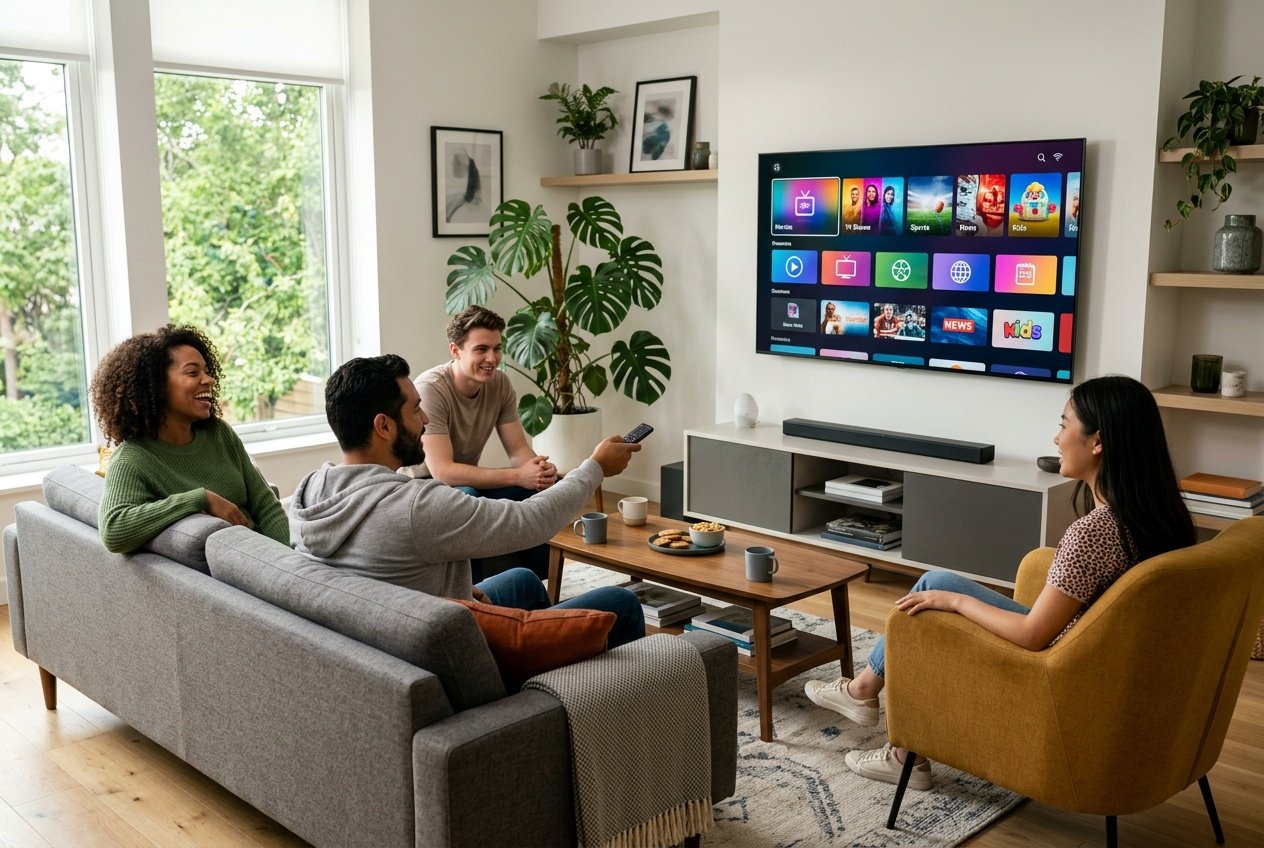
The scope of content available through IPTV subscriptions varies significantly across providers, with channel counts ranging from 4,000 to over 65,000 live streams. Your access to international programming, premium networks, and on-demand content depends largely on which service you select and at what subscription tier.
International and Regional Channels
IPTV services typically organize international channels by geographic region and language preference. Most providers offer dedicated sections for European, Asian, Middle Eastern, and Latin American content alongside North American programming.
Regional content availability differs substantially between services. Some providers specialize in specific markets—Scandinavia-IPTV4K focuses on Norwegian, Swedish, Danish, Finnish, and Icelandic channels, while others like WarpIPTV emphasize global coverage with channels from over 100 countries.
Common regional categories include:
- European markets: UK, German, French, Spanish, Italian broadcasts
- Nordic regions: Scandinavian-language programming
- Asian content: Chinese, Japanese, Korean, Indian channels
- Arabic networks: Middle Eastern and North African stations
- Latin American: Spanish and Portuguese-language channels
The number of regional channels varies from a few hundred to several thousand depending on the provider’s licensing arrangements and infrastructure.
Premium Channels and Sports Content
Premium channels represent a significant differentiator among IPTV subscriptions. These include networks like HBO, Showtime, and other pay-TV content that traditionally requires additional cable fees.
Sports channels constitute one of the most requested categories. Services like IPTV Trends and RocketStreams prioritize sports streaming with dedicated 4K channels for major leagues and tournaments. Coverage typically includes football, basketball, hockey, soccer, cricket, and pay-per-view events.
Sports-focused providers offer 24/7 sports networks, regional sports channels, and international sports coverage across multiple time zones. Some services provide access to PPV events without additional charges beyond the base subscription.
On-Demand Library and Content Updates
VOD content libraries represent a substantial portion of modern IPTV value. Library sizes range from 8,000 titles to over 200,000 movies and series depending on the provider.
Kemo IPTV offers access to 60,000+ movies and 8,400+ TV shows in its standard subscription. Higher-tier services like StreamingNordic IPTV provide over 200,000 VOD titles across multiple genres and languages.
Content updates occur on different schedules. Most providers add new releases weekly, while premium services update their libraries daily with recent theatrical releases and current TV episodes. The frequency and quality of these updates directly impacts the service’s long-term value, as outdated libraries quickly lose relevance compared to legitimate streaming platforms.
IPTV Subscriptions Pricing and Plans
IPTV subscriptions costs in 2026 typically range from $10.99 to $29.99 per month depending on connection limits and plan length, with budget providers offering competitive rates and premium services charging more for enhanced features and reliability.
Affordable IPTV and Budget Options
Budget IPTV services operate in the $8-15 monthly range and provide substantial value for cost-conscious viewers. These affordable IPTV options typically include HD streaming, basic electronic program guides, and standard channel packages with thousands of live channels.
The pricing structure rewards longer commitments. A single-connection plan at $14.99 monthly drops to approximately $10.50 monthly when billed annually, representing a 30% savings. Two-connection plans average $19.99 monthly, which breaks down to $10 per simultaneous viewer.
Standard pricing tiers by connection count:
- 1 connection: $10.99-14.99/month
- 2 connections: $17.99-21.99/month
- 4 connections: $24.99-29.99/month
Budget IPTV providers focus on delivering good-enough quality without premium features. You get reliable streaming for daily viewing, though server quality and customer support responsiveness may vary compared to higher-priced options. Mid-range providers in the $15-25 bracket offer better reliability and additional features like catch-up TV and VOD libraries.
Free Trials and Money-Back Guarantees
Most reputable IPTV providers offer either a 24-hour free trial or a 30-day money-back guarantee to reduce your purchase risk. The 24-hour trial period gives you immediate access to test channel availability, streaming quality, and interface usability before committing financially.
Free trial access typically requires creating an account but doesn’t demand payment information upfront. You can verify that your preferred channels stream reliably, check whether the EPG functions properly, and confirm compatibility with your devices.
The 30-day money-back guarantee serves as an extended trial period after purchase. If service quality doesn’t meet your expectations or technical issues arise, you can request a full refund within the guarantee window. This protection is particularly valuable for longer subscription commitments where you’re paying upfront for quarterly or annual access.
Not all providers offer both options. Some budget services provide trials but no refund guarantee, while premium providers may skip trials entirely and rely on their money-back guarantee as the testing mechanism.
Subscription Plans and Payment Methods
Subscription plans follow three standard billing periods: monthly, quarterly, and annual. Monthly plans offer flexibility without long-term commitment but cost 30-50% more than annual plans on a per-month basis. Quarterly plans provide moderate savings while limiting your commitment to three months. Annual plans deliver maximum savings and typically include bonus features or extended connection limits.
Payment options vary by provider. Credit and debit cards are universally accepted. PayPal availability depends on the provider’s payment processor relationships and regional restrictions. Cryptocurrency payments (Bitcoin, Ethereum) have become more common among IPTV services, offering privacy and bypassing traditional payment processor limitations.
Some providers accept prepaid cards or digital wallets, though this varies significantly. Your payment method doesn’t typically affect your subscription price, but certain processors may add small transaction fees. Verify accepted payment options before selecting a provider, especially if you prefer PayPal or cryptocurrency for privacy or convenience reasons.
Legal Considerations and Risks
IPTV subscriptions exist in a complex legal landscape where legitimacy depends on licensing, and users face potential challenges including geo-restrictions and ISP throttling. Understanding the difference between legal and unverified services protects you from significant financial and legal consequences.
Is IPTV Legal?
IPTV technology itself is completely legal. The legality of your IPTV subscriptions depends entirely on whether the provider has obtained proper licensing agreements to distribute content.
Licensed IPTV services operate legally by securing distribution rights from content creators and copyright holders. These providers comply with FCC regulations in the United States and similar regulatory bodies in other countries. Services that hold proper licenses are legitimate alternatives to traditional cable.
Unlicensed IPTV services bypass copyright laws by streaming content without permission from rights holders. Using these services exposes you to legal risks including fines and potential prosecution. Copyright holders lose billions annually to piracy, and enforcement agencies actively pursue both providers and users of illegal services.
In the U.S., copyright law holds users accountable for accessing unauthorized content. Recent enforcement actions have resulted in subscriber fines and legal penalties for those using unlicensed services.
Geo-Restrictions and ISP Throttling
Geo-restrictions limit content availability based on your geographic location. Licensed providers implement these restrictions to comply with regional licensing agreements and broadcasting rights.
Your internet service provider may throttle bandwidth when detecting high-volume streaming activity. This practice reduces your connection speed and causes buffering during playback. ISP throttling affects both legal and illegal IPTV services.
Some users attempt to bypass geo-restrictions using VPNs or other tools. However, this practice may violate your IPTV provider’s terms of service and licensing agreements. Legal providers typically prohibit circumvention methods in their user agreements.
Licensed vs Unverified IPTV Providers
Licensed IPTV providers display transparent business information, clear terms of service, and verifiable licensing documentation. These services offer secure payment processing, reliable customer support, and consistent streaming quality.
Unverified providers often advertise suspiciously low prices, offer “too good to be true” channel counts, and lack transparent business operations. These services frequently experience service interruptions, poor streaming quality, and sudden shutdowns. They also expose your devices to malware and compromise your personal information through unsecured payment systems.
You can verify a provider’s legitimacy by checking for published licensing information, reading customer reviews on independent platforms, and confirming secure payment methods. Monthly subscription costs for legal services typically range from $12 to $25, reflecting the actual cost of licensing content.
IPTV Subscriptions Setup and Activation
Setting up an IPTV subscriptions requires understanding which devices work with your service and following the correct activation process. Most providers support multiple platforms and deliver credentials through M3U playlist URLs or Xtream Codes API login details.
Supported Devices and Platforms
Your IPTV subscriptions works across a wide range of devices, giving you flexibility in how you access content. The most common platforms include Android TV, Fire Stick, Smart TVs (Samsung, LG, Sony), iOS devices, MAG boxes, and standard computers running Windows or Mac.
Android-based devices like Fire Stick and Android TV boxes represent the most popular choice among US subscribers. These devices support dedicated IPTV apps like IPTV Smarters Pro and TiviMate.
Apple users can access services through Apple TV or iOS devices using compatible apps from the App Store. For traditional IPTV boxes, MAG devices require MAC address registration with your provider.
Smart TVs with built-in app stores allow direct installation of IPTV applications. Computers offer the most basic setup through media players like VLC, which streams M3U playlists directly.
Most US providers allow simultaneous streaming on 2-5 devices depending on your subscription tier. Check your service agreement for specific device limits and compatibility requirements before purchasing.
Setup Guide and Activation Steps
Activation begins after purchasing your subscription and receiving login credentials from your provider. You’ll receive either an M3U URL (a direct playlist link) or Xtream Codes API details (username, password, and server URL).
For Android TV and Fire Stick, download an IPTV player app like IPTV Smarters Pro from your device’s app store. Open the app and select “Login with Xtream Codes API.” Enter your portal URL (typically formatted as http://provider.com:8080), username, and password. Tap connect and your channel list populates automatically.
iOS and Apple TV users follow similar steps with compatible apps. Download an IPTV player, select your login method, and input credentials.
For MAG boxes, locate the MAC address on the device label or in system settings. Submit this MAC address to your provider through their activation portal. Your provider links the MAC address to your account remotely.
Computer setup requires downloading VLC Media Player or a similar application. Open VLC, navigate to “Media” then “Open Network Stream,” and paste your M3U URL. Your channels stream directly through the player.
Most activations complete within minutes. If channels don’t appear, verify your internet connection maintains at least 25 Mbps speed and confirm you’ve entered credentials exactly as provided.
Top Recommended IPTV Subscriptions Services
The IPTV market in 2026 features established providers offering extensive channel lineups, reliable streaming technology, and flexible pricing structures. Services like USA LIVE IPTV, Kemo IPTV, and XTREAM VIEW lead with 20,000+ channels, while emerging options provide specialized content for specific audiences.
Best IPTV Service Providers
USA LIVE IPTV ranks among the best IPTV service providers with 20,000+ live channels and 136,000+ movies and TV shows. The service uses AntiFreeze 10.0 technology to eliminate buffering during live sports. Pricing starts at $49.96 for three months, with a 30-day money-back guarantee for new subscribers.
Kemo IPTV delivers instant activation and 99.9% uptime with 20,000+ channels and 60,000+ movies. You get 4K and 8K UHD quality across multiple devices simultaneously. Monthly plans begin at $9 for single connections, with annual subscriptions at $49. The service includes HBO, Netflix, Hulu, and Prime Video integration.
XTREAM VIEW provides 31,000+ channels with focus on Canadian and global content. The anti-freeze servers maintain stream quality during high-traffic periods. Plans start at $11.99 monthly, with a 24-hour free trial available. Premium access includes DAZN Canada and specialized sports packages.
Popular Options for 2026
The best IPTV services prioritize content variety and streaming reliability. Most top IPTV providers offer 24-hour free trials or money-back guarantees to test service quality before committing.
DigitaLizard IPTV features 12,000+ channels with 24-hour trial access. The platform supports Fire TV Stick, Android TV, and Smart TV devices with consistent HD streaming quality.
OrigineTV stands out with 55,000+ channels covering international markets. You access content through major IPTV players with no geographical restrictions. The service provides 24-hour trial periods for evaluation.
Traditional alternatives like YouTube TV and Sling TV offer legal streaming with official network partnerships. YouTube TV costs approximately $73 monthly for 100+ channels, while Sling TV starts at $40 with customizable packages.
Digitalizard, Apollo Group TV, and Noteworthy Brands
Digitalizard specializes in sports and entertainment content with reliable anti-buffering technology. The service supports multi-device streaming and provides regular content updates for movies and series.
Apollo Group TV focuses on premium sports packages and international programming. You get access to dedicated customer support and flexible subscription terms ranging from monthly to annual plans.
WorthyStream delivers budget-friendly IPTV options with essential channel packages. The platform emphasizes user-friendly interfaces and quick setup processes across compatible devices.
These providers compete on content volume, streaming stability, and customer support quality. Your choice depends on specific channel requirements, device compatibility, and budget constraints for long-term subscriptions.
Frequently Asked Questions
IPTV subscriptions typically range from $10 to $25 per month depending on channel counts and features, while annual plans offer savings but require upfront payment. Setup works on most streaming devices including Fire TV Stick, though reliability varies by provider and your internet connection.
How much does a typical service cost per month, and what factors affect the price?
Most IPTV subscriptions cost between $10 and $25 per month. Budget providers at the lower end typically offer 5,000 to 10,000 channels, while premium services charging $20 or more may include 20,000+ channels, 4K streaming, and better server infrastructure.
The number of simultaneous connections affects pricing significantly. A single-device plan costs less than multi-connection packages that let you stream on 2-4 devices at once.
Content variety also impacts cost. Services with extensive international channels, sports packages, pay-per-view events, and large on-demand libraries charge more than basic live TV offerings.
What’s the difference between monthly plans and a 12‑month plan in terms of value and risk?
A 12-month plan typically costs 30-50% less than paying monthly for the same period. You might pay $60-$100 upfront for a year instead of $15-$25 each month, saving $80-$200 annually.
The main risk is service reliability over time. If the provider experiences technical issues, shuts down, or fails to meet your expectations, you’ve already paid for months you can’t use.
Monthly plans cost more overall but let you cancel anytime without losing a large upfront payment. You can test service quality and switch providers if needed.
Will it work reliably in the USA, and do I need a VPN for consistent streaming?
IPTV services work in the USA as long as you have a stable internet connection of at least 15 Mbps for HD content. Reliability depends more on the provider’s server quality than your location.
A VPN adds a layer of privacy by masking your streaming activity from your internet provider. Some IPTV services recommend VPN usage, though it’s not technically required for the stream to function.
VPNs can occasionally slow your connection speed due to encryption overhead. You’ll need to balance privacy benefits against potential buffering if your base internet speed is already marginal.
How do I set it up on an Amazon Fire TV Stick, and which apps are commonly used?
You install an IPTV player app on your Fire Stick, then enter the login credentials or playlist URL your provider sends you. The most common apps are IPTV Smarters Pro, TiviMate, and Perfect Player.
To install these apps, you’ll need to enable “Apps from Unknown Sources” in your Fire Stick settings. Most providers offer step-by-step installation guides specific to Fire TV devices.
Setup typically takes 10-15 minutes. After entering your M3U URL or Xtream Codes login, the app loads your channel list and you can start streaming immediately.
Can I get a package that includes Indian channels or Arabic channels, and how do I confirm the channel list?
Many IPTV providers offer specialized packages with hundreds of Indian channels including Star Plus, Zee TV, and regional language networks. Arabic packages typically include MBC, Al Jazeera, Rotana, and OSN channels.
Always request a complete channel list before subscribing. Reputable providers publish their channel lineup on their website or send it via email during the signup process.
Free trials let you verify that specific channels you want are actually available and working. A 24-hour trial is standard and gives you time to test channel quality and availability.
Can my internet provider detect this type of streaming, and what are the common signs or consequences?
Your internet provider can see that you’re streaming large amounts of data but cannot see the specific content without deep packet inspection. They see encrypted traffic going to various IP addresses.
Most ISPs don’t actively monitor or care about IPTV usage unless they receive copyright complaints. Standard consequences are rare for individual subscribers, though some providers may send warning notices if flagged.
Using a VPN encrypts your traffic and prevents your ISP from identifying streaming patterns. Without a VPN, your ISP can theoretically log connection data, though enforcement against end users remains uncommon in practice.
IPTV subscriptions IPTV subscriptions IPTV subscriptions IPTV subscriptions IPTV subscriptions IPTV subscriptions IPTV subscriptions IPTV subscriptions IPTV subscriptions IPTV subscriptions IPTV subscriptions IPTV subscriptions IPTV subscriptions IPTV subscriptions IPTV subscriptions IPTV subscriptions IPTV subscriptions IPTV subscriptions IPTV subscriptions IPTV subscriptions IPTV subscriptions IPTV subscriptions IPTV subscriptions IPTV subscriptions IPTV subscriptions IPTV subscriptions IPTV subscriptions IPTV subscriptions IPTV subscriptions IPTV subscriptions IPTV subscriptions IPTV subscriptions IPTV subscriptions IPTV subscriptions IPTV subscriptions IPTV subscriptions IPTV subscriptions IPTV subscriptions IPTV subscriptions IPTV subscriptions IPTV subscriptions IPTV subscriptions IPTV subscriptions IPTV subscriptions IPTV subscriptions IPTV subscriptions IPTV subscriptions IPTV subscriptions