HD IPTV has transformed how viewers access television content by delivering high-definition channels through internet protocol technology rather than traditional cable or satellite systems. This streaming method provides access to thousands of live channels, on-demand content, and sports programming across multiple devices with just an internet connection.
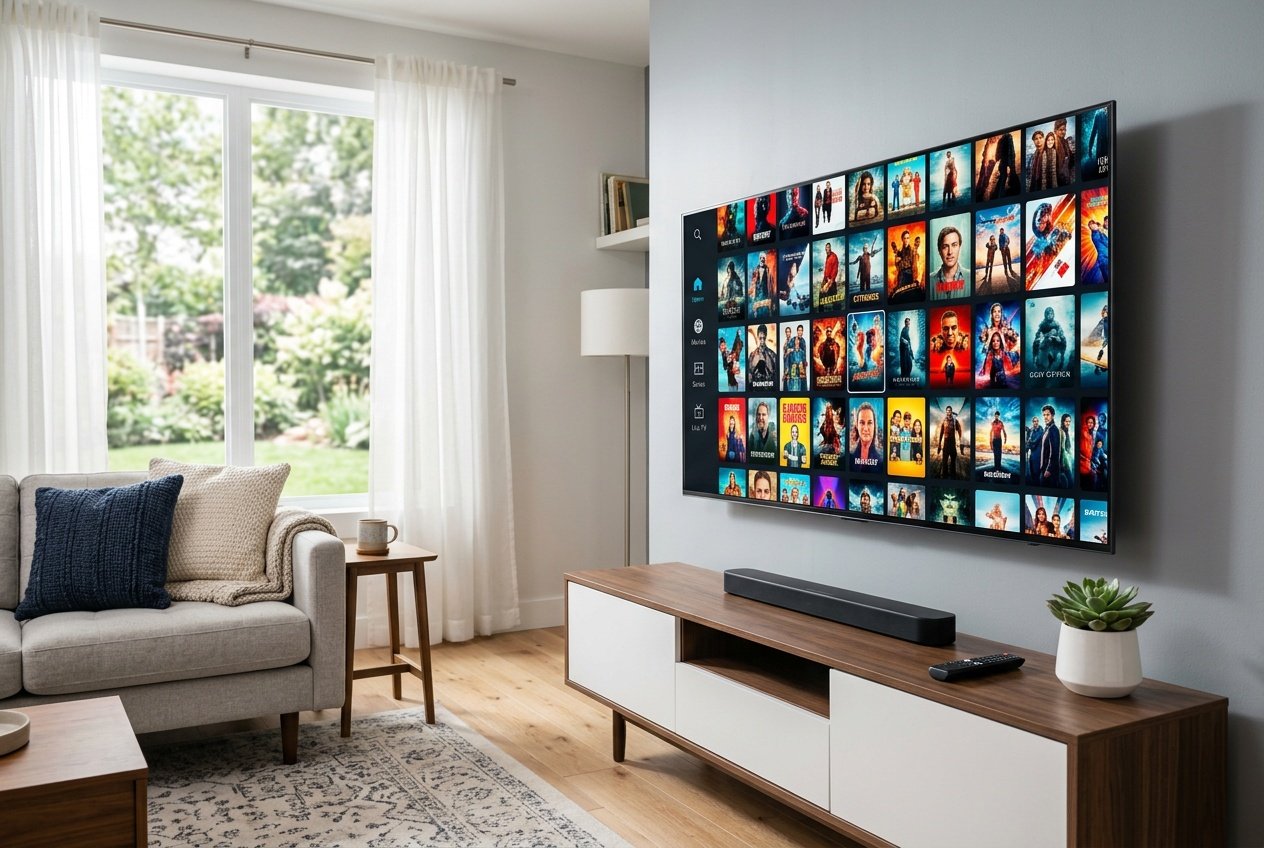
HD IPTV services typically offer 20,000+ live channels, video-on-demand libraries, and 4K streaming quality at subscription prices ranging from $15 to $500 depending on the number of devices and subscription length. The technology works across smart TVs, streaming devices like Firestick, mobile phones, and computers, making it a flexible alternative to conventional TV services. Most providers include features like electronic program guides, anti-freeze technology, and 24/7 customer support.
Understanding how HD IPTV works, what features to prioritize, and which providers offer reliable service helps you make an informed decision about cutting the cord. The market includes numerous options with varying channel selections, streaming quality, and pricing structures that cater to different viewing needs and budgets.
Key Takeaways
- HD IPTV delivers high-definition television content over the internet with access to thousands of channels and on-demand content across multiple devices
- Services range from $15 to $500 based on subscription duration and device limits, with most offering 4K quality and extensive channel libraries
- Reliable providers maintain 99.9% uptime, offer multi-device compatibility, and include features like EPG, VOD, and sports programming
Understanding HD IPTV

HD IPTV delivers television content through internet protocols at high-definition resolution, typically 1080p or 720p. This streaming technology transmits live TV and on-demand content through your internet connection rather than traditional broadcast methods.
What Is HD IPTV?
HD IPTV refers to Internet Protocol Television services that stream content at high-definition quality levels. The “HD” designation means you receive video at resolutions of either 720p (1280×720 pixels) or 1080p (1920×1080 pixels), providing significantly sharper images than standard-definition alternatives.
Your IPTV service uses internet protocols to deliver media content directly to your devices. This differs from conventional streaming platforms because IPTV employs specific protocols like IGMP (Internet Group Management Protocol) to manage and distribute multiple live TV channels simultaneously. The technology enables providers to offer 100+ channels efficiently while maintaining consistent HD quality across all streams.
When you subscribe to an HD IPTV service, you access channels across categories including sports, entertainment, news, and premium content. The high-definition format ensures you see clearer details, better color accuracy, and reduced pixelation compared to lower-resolution options.
How HD IPTV Works
Your HD IPTV service operates through a series of technical processes that deliver content to your screen. The provider encodes video content and compresses it using codecs to reduce file size while maintaining quality. This encoded content travels through content delivery networks (CDNs) that distribute streams across multiple servers.
When you select a channel or program, your device sends a request through your internet connection. The IPTV server responds by transmitting the HD video stream in small data packets. Your device receives these packets, decodes them, and displays the content on your screen in real-time.
The streaming technology requires sufficient bandwidth to maintain HD quality. You need approximately 5-8 Mbps for stable 720p streaming and 8-12 Mbps for 1080p content. Your IPTV provider may use adaptive streaming, which automatically adjusts quality based on your current internet speed to prevent buffering interruptions.
HD IPTV vs. Traditional TV
Traditional cable and satellite TV transmit signals through physical infrastructure—coaxial cables or satellite dishes. You receive predetermined channel packages with limited customization options. HD IPTV eliminates this physical infrastructure requirement by using your existing internet connection.
With traditional TV, you typically need separate equipment for each television and face geographical broadcasting limitations. IPTV allows you to watch live TV on multiple devices simultaneously, including smartphones, tablets, smart TVs, and computers. You control what you watch and when you watch it.
Key Differences:
| Aspect | HD IPTV | Traditional TV |
|---|---|---|
| Delivery Method | Internet protocols | Cable/Satellite signals |
| Device Flexibility | Multiple devices | Fixed set-top boxes |
| Installation | Software-based setup | Physical equipment required |
| Channel Access | On-demand and live | Scheduled programming |
| Bandwidth | Requires stable internet | Independent connection |
Traditional TV charges you for bundled packages regardless of viewing habits. IPTV services often provide more flexible subscription options tailored to your preferences.
Key Features and Benefits of HD IPTV

HD IPTV delivers television content over internet protocols with enhanced picture quality, smooth streaming performance, and extensive content libraries that surpass traditional cable offerings. These systems provide access to thousands of live tv channels and on-demand content with resolution options ranging from standard HD to 4K streaming and beyond.
Streaming Quality and Resolution
HD IPTV supports multiple resolution formats to match your internet speed and display capabilities. You can access hd streaming at 720p or 1080p as standard offerings, while premium services provide 4k streaming for compatible devices.
Most providers now include uhd streaming options that deliver four times the pixel density of standard HD. Some cutting-edge services even offer 8k streaming, though you’ll need specialized equipment and robust internet bandwidth to take advantage of this format.
The adaptive bitrate technology automatically adjusts video quality based on your connection speed. This ensures you receive the best possible picture without manual intervention. Your streaming performance remains consistent whether you’re watching on a 50-inch TV or a mobile device.
Modern compression standards like H.265 enable higher quality at lower bandwidth requirements. You can enjoy crystal-clear visuals without consuming excessive data, making HD IPTV practical even with moderate internet plans.
Buffer-Free Viewing Experience
Buffer-free streaming represents one of HD IPTV’s most significant advantages over unreliable services. Quality providers use dedicated servers and optimized content delivery networks to maintain uninterrupted playback during live events and on-demand viewing.
The technology employs pre-buffering techniques that load content slightly ahead of your current viewing position. This prevents interruptions when network conditions fluctuate temporarily. You won’t experience the frustrating pauses that plagued earlier streaming systems.
Your streaming performance depends on several factors: internet speed (minimum 25 Mbps for HD, 50 Mbps for 4K), server quality, and network congestion. Reputable IPTV services maintain multiple server locations to distribute load and reduce latency.
Advanced protocols like HLS and MPEG-DASH further enhance reliability by breaking content into small segments. If one segment fails to load, the system quickly retrieves it without disrupting your entire stream.
Content Variety: Live Channels and VOD
HD IPTV services typically offer 10,000 to 20,000+ live tv channels spanning sports, news, entertainment, and international programming. You gain access to content from multiple countries and languages that traditional cable packages cannot match.
The vod library complements live programming with extensive on-demand content. Your content library includes recent movies and tv shows, classic films, documentaries, and exclusive series. Most services add content updates weekly or monthly to keep offerings fresh.
Typical content breakdown:
| Category | Available Options |
|---|---|
| Live Channels | Sports, news, entertainment, kids, lifestyle |
| On-demand movies | Latest releases, classics, international films |
| TV Series | Current seasons, complete series, exclusive content |
| Special Events | Pay-per-view, concerts, sports packages |
You can create personalized playlists from the video-on-demand catalog and save favorites for quick access. The vod options include pause, rewind, and replay functions that give you complete control over your viewing schedule. Many providers organize their on-demand content by genre, release date, and popularity ratings for easier navigation.
Top HD IPTV Service Providers in 2026
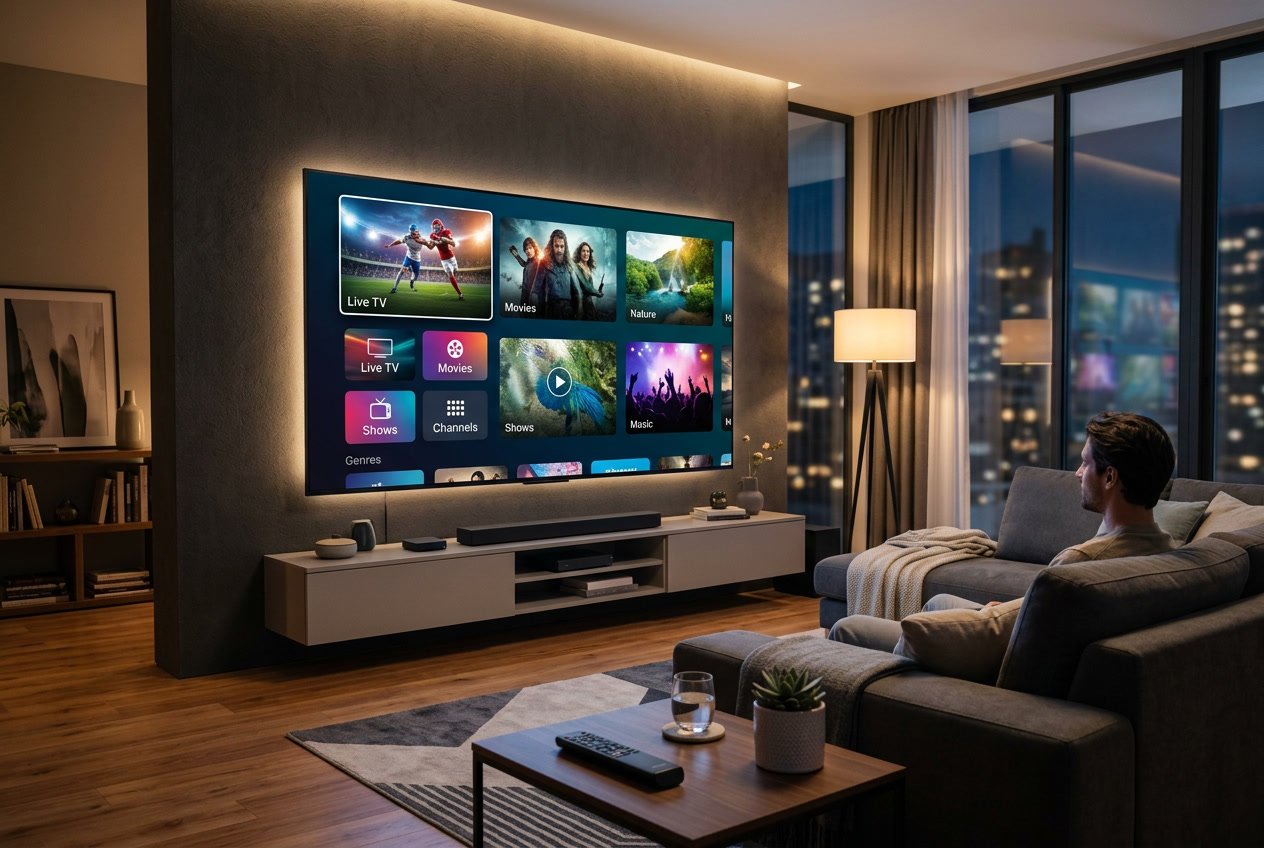
SonixIPTV leads the HD IPTV market with 99.7% uptime and 45,000+ channels, while budget-friendly options like PioneersTV and specialized sports services provide alternatives across different price points and viewing preferences.
Best Overall HD IPTV Providers
SonixIPTV ranks as the best IPTV service in 2026 for HD streaming. You get access to 45,000+ live channels from 120+ countries with consistent 99.7% uptime during extended testing periods. The platform supports 4K streaming alongside standard HD content and includes 140,000+ VOD titles.
PioneersTV offers strong competition with 35,000+ channels and 98.9% reliability at a lower annual cost. You receive stable HD streaming across most channels with comprehensive international coverage spanning Europe, Asia, and North America.
IPTVGeeks targets advanced users with 28,000+ channels and unique features including 7-day replay functionality and API integration. The service allows three simultaneous connections on standard plans, making it suitable for households with multiple viewers requiring HD content.
Xtreme HD IPTV maintains its reputation for premium performance with worldwide channel access and reliable streaming infrastructure focused on HD quality delivery.
Premium and Affordable HD IPTV Options
Premium IPTV services like SonixIPTV start at $74 annually while delivering complete sports packages including NFL Sunday Ticket, NBA League Pass, and UFC PPV events at no additional cost. You get daily VOD updates with new releases appearing within 24 hours.
PioneersTV provides the best value among affordable IPTV options with 35,000+ channels and 80,000+ VOD titles at competitive pricing. Limited 4K availability means you primarily access HD content, but performance remains consistent across most channels.
IPTVService.net operates in the mid-tier range with 32,000+ channels and 98.2% uptime. You receive fair pricing for dependable HD streaming without premium features or extensive 4K libraries.
KickLTV serves as the entry-level option with 22,000 channels and 58,000 VOD titles. The service caps resolution at 720p and restricts you to single-device usage, making it suitable only for individual viewers with minimal streaming requirements.
Notable Niche and Sports IPTV Services
Falcon IPTV specializes in sports content delivery across HD channels focused on live events and premium sports packages. You access dedicated sports programming with reliability during peak viewing times.
KickIPTV targets budget-conscious sports fans with 25,000 channels emphasizing NFL, NBA, NHL, and international soccer coverage. You experience 97.8% uptime with occasional buffering during high-traffic events, though pricing remains competitive compared to premium sports-focused providers.
Apollo Group TV provides niche content alongside general HD streaming with specialized channel packages tailored to specific viewing interests. The platform balances sports and entertainment content across its HD offerings.
SonixIPTV includes the most comprehensive sports coverage among general IPTV services, giving you full access to boxing events, international football leagues, and premium PPV without additional fees beyond your subscription.
Global and Regional IPTV Choices
SonixIPTV delivers the largest international selection with channels from 120+ countries spanning North America, Europe, Asia, Latin America, and the Middle East. You access regional programming in native languages with HD quality maintained across geographic boundaries.
PioneersTV excels in international programming with strong European, Asian, and Middle Eastern coverage alongside North American channels. You receive balanced regional content at affordable pricing points compared to services targeting specific geographic markets.
USA Live IPTV focuses on American channels with localized HD content tailored to viewers in the United States. The service concentrates on regional sports networks, local news stations, and US-based entertainment programming.
Nomad IPTV and DigitaLizard IPTV provide regional alternatives with varying channel counts and geographic specializations. You select providers based on your specific regional requirements and language preferences for HD streaming content.
Device Compatibility and Setup
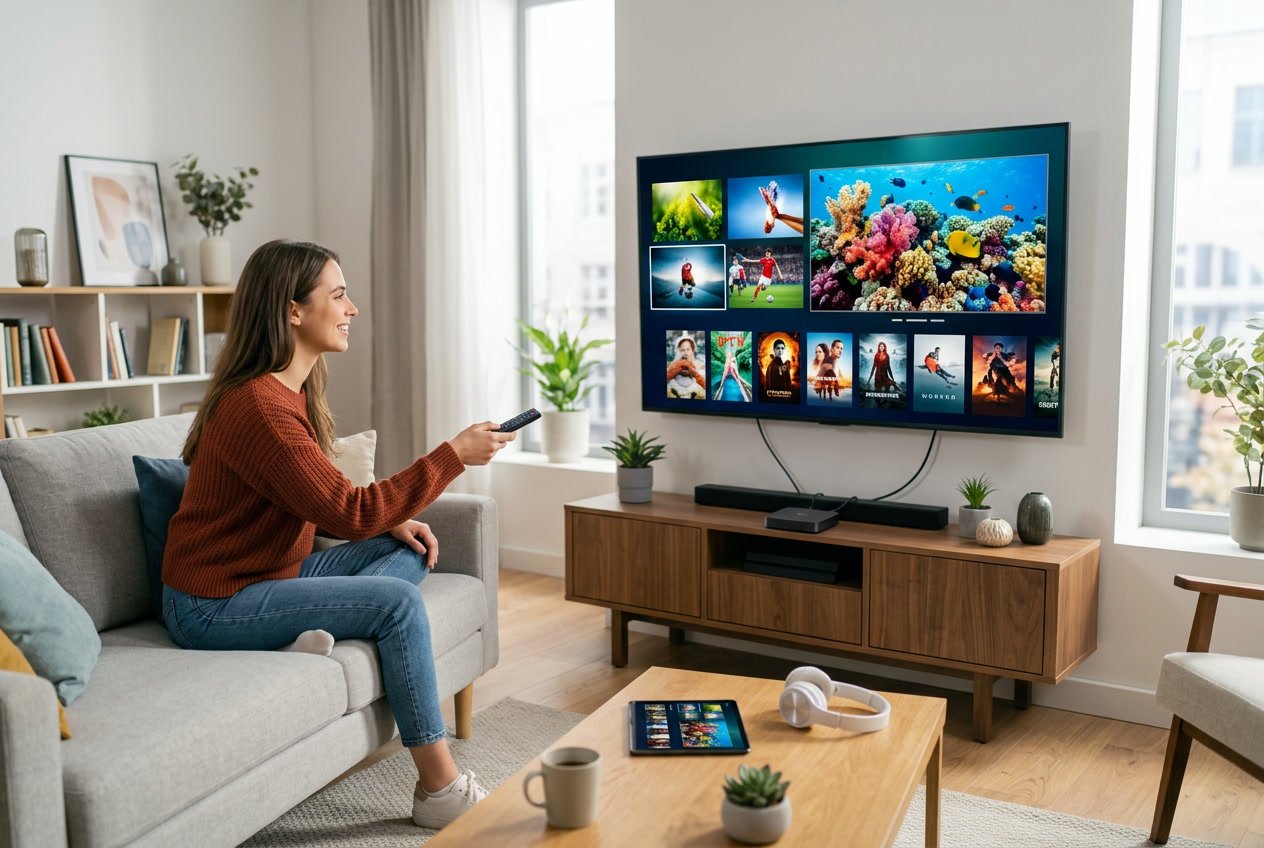
HD IPTV works across most modern streaming devices, from smart TVs to smartphones. The setup process varies by platform, but all require an IPTV player app and your subscription credentials to start streaming.
Supported Devices for HD IPTV
HD IPTV streams on nearly every internet-connected device you own. Smart TVs from Samsung and LG support IPTV through apps like Smart IPTV and SS IPTV, which you can download directly from their app stores. Samsung Smart TV users install apps from the Samsung App Store, while LG owners use the LG Content Store.
Amazon’s Firestick and Fire TV Stick 4K are popular choices because they support sideloaded apps and handle HD streams without buffering on decent internet connections. The Nvidia Shield stands out as a premium option with superior processing power for 4K IPTV content.
Android devices offer the widest app selection. You can install IPTV Smarters Pro or TiviMate directly from Google Play on your Android smartphone, tablet, or Android TV box. iOS devices support IPTV through the App Store version of IPTV Smarters Pro.
Windows PCs and Windows PCs run IPTV through desktop apps or VLC Media Player. Mac users with Apple Silicon chips can run iOS IPTV apps directly, while Intel Mac users rely on VLC or IINA player.
Setting Up IPTV Apps and Players
Setup begins with downloading an IPTV player app compatible with your device. IPTV Smarters Pro works on most platforms and supports both M3U URLs and Xtream Codes login formats. TiviMate is another popular choice, especially on Android TV devices, offering a polished interface designed for TV screens.
After installing your chosen app, you need to add your subscription. Most providers give you either an M3U URL or Xtream Codes credentials. Open your IPTV player app, select the add subscription option, and enter your credentials. The app loads your channel list within 30 to 60 seconds.
Firestick users must enable Apps from Unknown Sources before sideloading apps. Go to Settings → My Fire TV → Developer Options and toggle this setting on. Then use the Downloader app to install APK files from trusted sources.
Smart TV setup differs slightly. You download the app from your TV’s official store, note the MAC address displayed on first launch, then register that MAC address on the app’s web portal along with your M3U URL.
Multi-Device Streaming and Simultaneous Streams
Multi-device support depends on your IPTV provider’s plan, not the devices themselves. Most subscriptions include one to five simultaneous streams. This means you can watch different channels on your Samsung Smart TV and Android smartphone at the same time, as long as you stay within your plan’s stream limit.
Multi-device compatibility allows you to use the same subscription credentials across all your devices. Install the IPTV player app on your Firestick, smartphone, and tablet, then log in with identical credentials. Your channel lineup and settings sync automatically when using Xtream Codes API.
Check your provider’s terms before streaming on multiple devices. Some plans restrict simultaneous streams to one, while premium tiers offer three to five concurrent connections. Exceeding your limit typically disconnects the oldest active stream or blocks new connections until you stop playback on another device.
Multi-device streaming works best when each device uses a wired Ethernet connection or strong WiFi. HD streams require 10 Mbps per device, so streaming on three devices simultaneously needs at least 30 Mbps total bandwidth from your internet plan.
Channel Selection and Content Library
HD IPTV services typically offer extensive channel libraries with over 20,000 live channels and 40,000+ on-demand titles. The selection spans US networks, international programming, premium movie channels, and comprehensive sports coverage across multiple subscription tiers.
Live TV Channel Lineup
Your live channel options include major US networks like ABC, NBC, CBS, and FOX, alongside cable favorites such as ESPN, CNN, FOX News, and HGTV. Sports channels form a significant portion of the lineup, with dedicated networks like Golf Channel, NBA TV Canada, and MAVTV providing specialized coverage. Premium services add Sky Cinema networks, HBO, Showtime, and Starz to your channel selection.
News coverage extends from BBC News and CNN HD to MSNBC and FOX News. Documentary enthusiasts get access to National Geographic, Discovery Channel, and Smithsonian Channel. Family-oriented programming includes Nickelodeon, Disney Channel, and educational networks like PBS Kids and Discovery Family. Most providers organize their channel library into categories, making it easier to navigate through the extensive offerings.
International and Regional Programming
International channels expand your viewing options beyond domestic content. You can access UK networks like BBC One, BBC Two, ITV, Channel 4, and Channel 5, often with regional variations for localized programming. European content includes RTL, ProSieben, and Sat.1.
French-language channels such as TV5 Québec and Italian networks like RAI Italia cater to specific linguistic preferences. Asian content, Welsh-language channels including BBC Alba and S4C, and Middle Eastern networks like Al Jazeera and France 24 round out the international programming. The channel availability varies by provider and subscription tier, with some services offering over 32,000 channels across multiple languages.
Movies, Series, and Video-On-Demand
Your on-demand library typically contains 60,000 to 150,000 titles depending on your provider. Sky Cinema channels offer dedicated streams for action, comedy, and thriller content. Premium series networks include Sky Atlantic and AMC, featuring award-winning original programming.
The VOD content library lets you watch movies and shows on your schedule rather than following broadcast times. You’ll find both recent releases and classic titles organized by genre. Some providers include PPV events for special sports matches and entertainment specials. Content quality ranges from HD to 4K across most platforms, with automatic quality adjustment based on your connection speed.
Performance, Stability, and User Experience
HD IPTV services depend on consistent streaming quality, accurate program guides, and responsive support to function as true cable replacements. Stream stability under network load, EPG accuracy, and uptime reliability determine whether daily use remains practical or frustrating.
Streaming Quality and Stability
Streaming quality in HD IPTV ranges from standard definition to 4K, though actual output depends on your internet speed and provider infrastructure. Most services require at least 25 Mbps for HD channels and 50 Mbps or higher for 4K content without interruptions.
Stable streaming depends on server capacity during peak hours. Providers with anti-freeze technology or similar buffering reduction systems handle traffic surges more effectively. Without these measures, you may experience buffering during prime time or live sports events.
High-quality streaming also requires adaptive bitrate support. This feature adjusts resolution automatically when your connection fluctuates, maintaining playback instead of stopping entirely. Not all HD IPTV providers implement this consistently, which affects viewing smoothness during network congestion.
Testing stability over extended periods reveals more than short trials. A service might perform well for an hour but struggle during multi-hour sessions or when multiple devices stream simultaneously.
Electronic Program Guide (EPG) and Cloud DVR
An electronic program guide displays channel schedules, episode information, and upcoming content. EPG accuracy varies across HD IPTV services. Some update regularly with correct timing, while others show incomplete data or outdated listings.
Cloud DVR functionality lets you record programs to remote storage for later viewing. Not all HD IPTV providers include this feature, and those that do may limit recording hours or simultaneous recordings. Storage duration also varies, with some services deleting recordings after 30 days.
EPG integration with your chosen IPTV player affects usability. Third-party apps may display guide data differently, and some channels lack metadata entirely. Manual refresh options help when guide information falls out of sync.
Customer Support and Reliability
Customer support quality determines how quickly you resolve login issues, buffering problems, or billing questions. Email response times range from same-day replies to multi-day delays depending on the provider.
Uptime reliability matters for consistent access. Providers advertising 99.9% uptime typically experience brief maintenance windows rather than extended outages. However, regional server issues can still interrupt service temporarily.
Support channels vary by provider. Some offer live chat, while others rely solely on ticket systems. Installation guides and troubleshooting documentation reduce the need for direct contact when setup problems occur.
Response quality matters as much as speed. Clear troubleshooting steps solve issues faster than generic replies. Providers with detailed setup guides for specific devices typically require less ongoing support interaction.
Pricing, Plans, and Security Considerations
HD IPTV services typically range from $15 to $50 monthly depending on channel counts and streaming quality, with most providers offering tiered plans that balance cost against features like concurrent streams and DVR capabilities. Understanding pricing structures, trial periods, and potential security concerns helps you select an affordable IPTV subscription that meets your needs without compromising safety.
Typical Pricing and Subscription Models
Most HD IPTV providers structure their pricing across three main tiers. Basic plans start at $15-20 monthly and include 5,000+ channels with HD quality on 1-2 devices. Standard plans run $25-30 and offer 10,000+ channels with 4K streaming on 2-3 devices. Premium tiers cost $35-45 and deliver 20,000+ channels with 4K/8K quality across 3-5 simultaneous devices.
Annual subscriptions typically save you 25-40% compared to month-to-month billing. A $30 monthly plan often drops to $18-22 per month when paid yearly. Multi-device plans make streaming service costs more manageable for families since one subscription covers all household screens.
| Plan Type | Monthly Cost | Channels | Quality | Devices |
|---|---|---|---|---|
| Basic | $15-20 | 5,000+ | HD | 1-2 |
| Standard | $25-30 | 10,000+ | 4K | 2-3 |
| Premium | $35-45 | 20,000+ | 4K/8K | 3-5 |
Money-Back Guarantees and Free Trials
Reputable providers offer 24-48 hour free trials that let you test channel selection and streaming stability before committing. Some services extend this to 7-day trials for premium plans. Money-back guarantees typically span 7-14 days, giving cord-cutters time to evaluate whether the service replaces their traditional cable setup.
Always test during peak viewing hours to assess buffering performance. Check that your preferred channels load consistently and verify EPG accuracy. Read refund terms carefully since some providers only offer credits rather than cash refunds.
Payment flexibility matters for home entertainment budgets. Services accepting major credit cards and PayPal provide better purchase protection than those requiring cryptocurrency or gift cards.
Legality, Privacy, and ISP Throttling
Legal HD IPTV providers operate with proper content licensing and maintain transparent business operations. Services offering “all channels worldwide” for suspiciously low prices often stream copyrighted content illegally, risking sudden shutdowns and potential legal issues.
Your internet service provider may throttle bandwidth when detecting heavy streaming traffic. ISP throttling reduces your connection speed during peak hours, causing buffering even with adequate base speeds. Using a VPN masks your streaming activity from your ISP while adding encryption for privacy protection.
Check that your provider has clear privacy policies and secure payment gateways with SSL encryption. Legal services maintain physical business addresses and provide accessible customer support, unlike anonymous operations that disappear without refunding subscribers.
Frequently Asked Questions
Understanding IPTV legality, service quality, technical requirements, and subscription management helps you make informed decisions when selecting and using high-definition streaming services.
Is IPTV legal to use in my country, and what makes a service lawful or unlawful?
IPTV technology itself is legal in most countries. The legality depends entirely on whether the service provider has obtained proper licensing rights for the content they distribute.
Legal IPTV services pay content creators and broadcasters for the rights to stream their programming. These providers operate transparently with clear business information, customer support, and legitimate payment processing.
Unlawful services distribute copyrighted content without authorization from rights holders. Warning signs include unusually low prices, promises of “unlimited” premium channels for minimal cost, anonymous operators, and cryptocurrency-only payments.
You should verify that any IPTV provider operates legally in their jurisdiction and yours. Check if they publicly display licensing information and have a physical business address.
How can I tell if an IPTV provider is legitimate and reliable before subscribing?
Legitimate providers maintain professional websites with clear contact information, including physical addresses and customer service channels. They offer transparent pricing without hidden fees and provide detailed terms of service.
Research user reviews from multiple independent sources rather than testimonials on the provider’s own website. Look for consistent feedback about stream quality, uptime, and customer support responsiveness.
Reliable services typically offer trial periods or money-back guarantees so you can test their performance before committing to long-term subscriptions. They also provide multiple payment options through recognized processors rather than requiring untraceable payment methods.
Check whether the provider offers dedicated apps or supports standard IPTV protocols that work with established streaming applications. Professional services invest in proper infrastructure rather than relying solely on third-party playlist sharing.
What are the key differences between popular IPTV services when comparing channels, performance, and support?
Channel selection varies significantly between providers. Some services focus on specific regions or languages, offering thousands of channels from particular countries, while others provide broader international coverage with fewer channels per region.
Performance differences appear in stream stability, resolution options, and server reliability. Higher-quality services maintain multiple servers with redundancy to minimize downtime and buffering during peak viewing hours.
Customer support quality ranges from 24/7 live chat and phone assistance to email-only support with slow response times. Better providers offer comprehensive setup guides, troubleshooting documentation, and active support teams.
Price differences often reflect these quality variations. Services charging extremely low rates may compromise on server infrastructure, licensing, or support, while premium providers invest more in reliable streaming technology and proper content rights.
How do I renew an IPTV subscription without losing my account, playlists, or settings?
Most IPTV services maintain your account data on their servers, so renewing through the same account preserves your settings. Log into your account dashboard before your subscription expires and select the renewal option.
Your playlists, favorites, and viewing preferences typically remain stored under your username regardless of subscription status. However, you should renew before expiration to avoid potential account deactivation policies that some providers enforce after extended lapses.
Contact customer support if you experience any gaps in service during renewal. They can usually restore access immediately upon payment confirmation and ensure your configuration remains intact.
Save your login credentials and playlist URLs as backups. This allows you to quickly reconfigure your streaming apps if any issues occur during the renewal process.
What devices and apps are best for streaming IPTV in high definition with minimal buffering?
Android-based devices like Nvidia Shield, Formuler boxes, and Fire TV Stick 4K provide strong IPTV performance. These devices have sufficient processing power and memory to handle HD streams without lag.
Smart TVs from Samsung, LG, and Sony with built-in app stores can run IPTV applications directly. Newer models from 2022 onward typically have the hardware specifications needed for smooth HD playback.
IPTV Smarters Pro and TiviMate are popular applications that support HD streaming with user-friendly interfaces. They offer Electronic Program Guides, favorites management, and parental controls while maintaining stable connections.
Your internet connection matters more than the device for preventing buffering. Use wired ethernet connections instead of Wi-Fi when possible, as this eliminates wireless interference that causes stream interruptions.
Are 4K IPTV streams actually available, and what internet speed and hardware are required to run them smoothly?
4K IPTV streams exist but remain less common than HD options. Many providers advertise 4K capability, but actual availability depends on the specific channels and whether content owners broadcast in that resolution.
You need a minimum internet speed of 25 Mbps for stable 4K streaming, though 35-50 Mbps provides better reliability with headroom for other devices on your network. Your connection should maintain consistent speeds without significant fluctuations during peak hours.
Your streaming device must support 4K output and have HEVC (H.265) decoding capability. Devices like Nvidia Shield Pro, Apple TV 4K, and Fire TV Stick 4K Max handle these requirements, while older or budget devices may struggle with 4K processing.
Your television must have a 4K display and HDMI 2.0 or higher to receive the signal properly. You also need HDMI cables rated for 4K transmission to avoid bottlenecks between your streaming device and TV.
Table of Contents
HD IPTV HD IPTV HD IPTV HD IPTV HD IPTV HD IPTV HD IPTV HD IPTV HD IPTV HD IPTV HD IPTV HD IPTV HD IPTV HD IPTV HD IPTV HD IPTV HD IPTV HD IPTV HD IPTV HD IPTV HD IPTV HD IPTV HD IPTV HD IPTV